Hey lovelies! If you know me, you know I absolutely live for a good Sephora run. I spend hours digging through listings, tracking restocks, and finding the absolute best deals to share on my sephora sale hub. But today, we need to talk about some massive behind-the-scenes drama that is going to completely change the products we buy, love, and review.
LVMH just dropped a bombshell announcement reported by Beauty Packaging this June 2026. They have officially stolen away top L’Oréal executive Sylvia Tournery to become the new President of Sephora Collection. Tournery used to run product innovation and supply chain management over at L’Oréal’s Cosmetics Division. Now? She is heading straight to LVMH later this year to run Sephora’s massive in-house brand. Personally, I think this is a genius chess move that is going to make our beauty hauls look a whole lot different very soon.
📌 Quick Snapshot: The Major Takeaways
- The Big Jump: Sylvia Tournery leaves her massive product innovation and supply chain role at L’Oréal for LVMH.
- Her New Kingdom: She is taking full control of the entire Sephora Collection portfolio across makeup, skincare, and fragrance.
- LVMH’s Master Plan: This comes right alongside Sephora’s brand-new AI shopping ecosystem partnership with Google. Talk about a double threat.
- Timeline: She will officially take the reins in the second half of 2026 after her non-compete period wraps up.
🔍 The Real Reason This Executive Poaching Matters
Let’s look at the bigger picture here. The global beauty retail market skyrocketed to a mind-blowing $870 billion in 2025 according to Grand View Research. But the real goldmine? Private label brands. Back in 2010, store brands only made up about 8% of the market. By 2025, that number jumped to 15%.
In my experience reviewing beauty products, Sephora Collection has always been the ultimate budget-friendly sleeper hit. Industry estimates put its annual sales somewhere around $2 billion to $3 billion. Because it’s an in-house brand, the profit margins are way higher for Sephora than when they sell third-party luxury brands. While L’Oréal and LVMH sometimes share the playground (like LVMH’s Guerlain partnering in certain spaces), stealing Tournery is an aggressive, strategic poaching move designed to turn Sephora Collection into an absolute powerhouse.
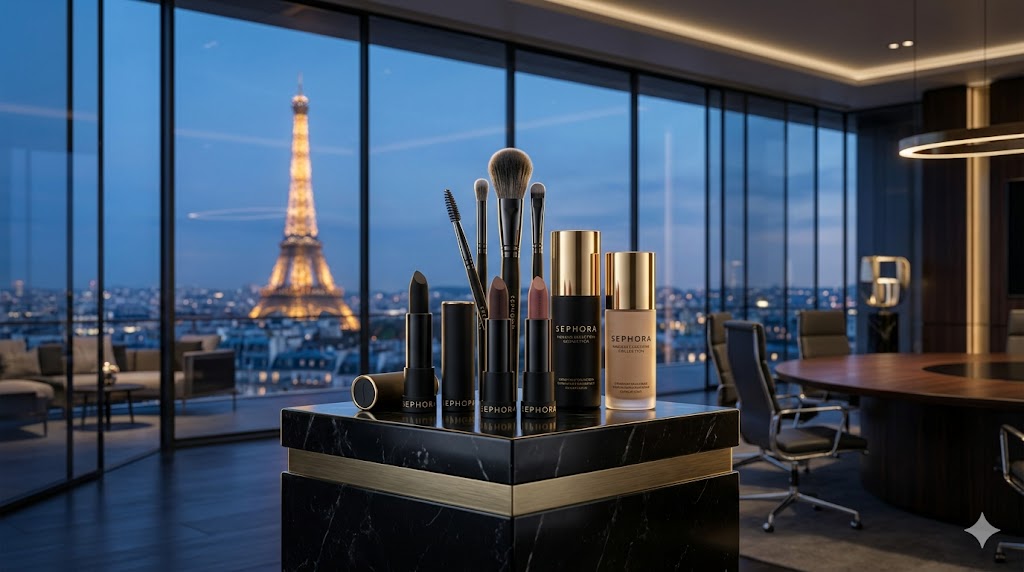 Image Source: Chic moeY / Sephora Official
📊 My Personal Industry Insights: What’s Happening Behind the Counter
- Private Labels Are Profit Monsters: In-house brands usually carry gross margins of 60% to 70%. Compare that to the standard 35% to 45% they make on regular brand counters. Getting a top-tier product lead means Sephora is securing its cash cow.
- L’Oréal is the Ultimate Talent Factory: It is a known pattern in the beauty world that L’Oréal executives constantly get headhunted to run companies like P&G, Unilever, and major DTC brands. Their training system is truly unmatched.
- The “Human + Tech” Power Play: LVMH isn’t just hiring smart people; they are actively integrating Google’s AI search and shopping tools. They are building a highly modern, tech-backed beauty experience.
- Personal Brand Power: This proof of talent shows that elite executives carry just as much weight as the legacy houses they work for. Where they go, the industry trends follow.
💼 Business Impact Breakdown
🎯 The Key Numbers To Know
- $870 Billion: The staggering size of the global beauty retail market in 2025.
- $2B – $3 Billion: The estimated current annual revenue of Sephora Collection alone.
- 60% – 70%: The incredible gross margin on store brands compared to just 35% – 45% for outside brands.
📈 What This Means For Future Beauty Trends
Short-Term (3-6 Months): Once Tournery settles into her office, expect an immediate full-scale audit of their current product formulas and branding. Personally, I predict a massive influx of new skincare drops, since skincare is currently the fastest-growing sector for private beauty labels.
Medium-Term (6-18 Months): If she successfully manages to scale Sephora Collection toward the $5 billion mark, it is going to completely disrupt the balance of power inside LVMH’s entire beauty division. It means more funding, better formulas, and even cooler product drops for us.
Long-Term (2-5 Years): In-house store brands are going to keep chipping away at traditional luxury brand shares. Estimates show private label beauty capturing up to 25% of the global market by 2030. Legacy brands are going to have to fight harder than ever to stay relevant.
🌐 Who This Affects & How to Adapt
Target Audience: Beauty industry recruiters, brand strategy directors, and market analysts tracking retail shifts.
Real-World Use Case: Executive benchmarking, private label positioning, and monitoring competitor talent maps.
The Strategy: Keep a very close eye on Sephora Collection’s new launches and price point adjustments over the next two quarters. Those first few releases will be the ultimate test of Tournery’s true influence on the brand.
❓ Frequently Asked Questions (FAQ)
Q: What exactly did Tournery do at L’Oréal before this?
A: She led product innovation and supply chain management for the main Cosmetics Division. That means she knows exactly how to build high-quality formulas quickly and affordably—which is exactly what Sephora Collection needs to dominate.
Q: Will this hurt legacy brands like Estée Lauder or Lancôme right away?
A: Not immediately. But it sends a loud signal that retail giants are prioritizing their own labels. Traditional brands will need to lock down tight exclusivity deals and unique partnerships to keep their shelf space safe.
Q: Why did LVMH choose to make this move right now?
A: Sephora is currently streamlining its global retail footprint and desperately needed an experienced product visionary to scale their internal brand. Tournery’s deep L’Oréal background paired with her sharp retail intuition made her the perfect match.